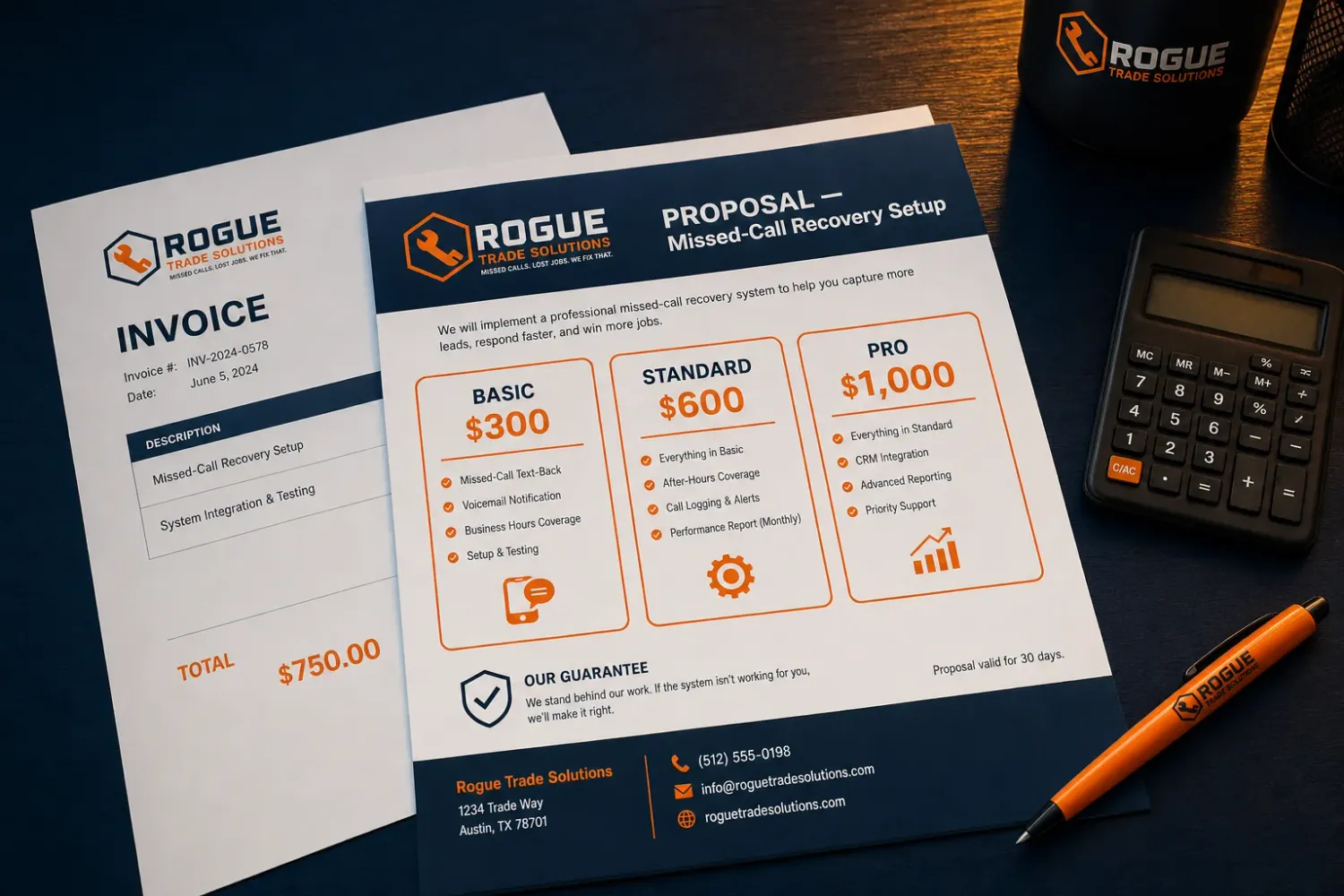
Plumbers near you lose $400 jobs to missed calls every week. Fixing it pays $300–$1,000 per setup.
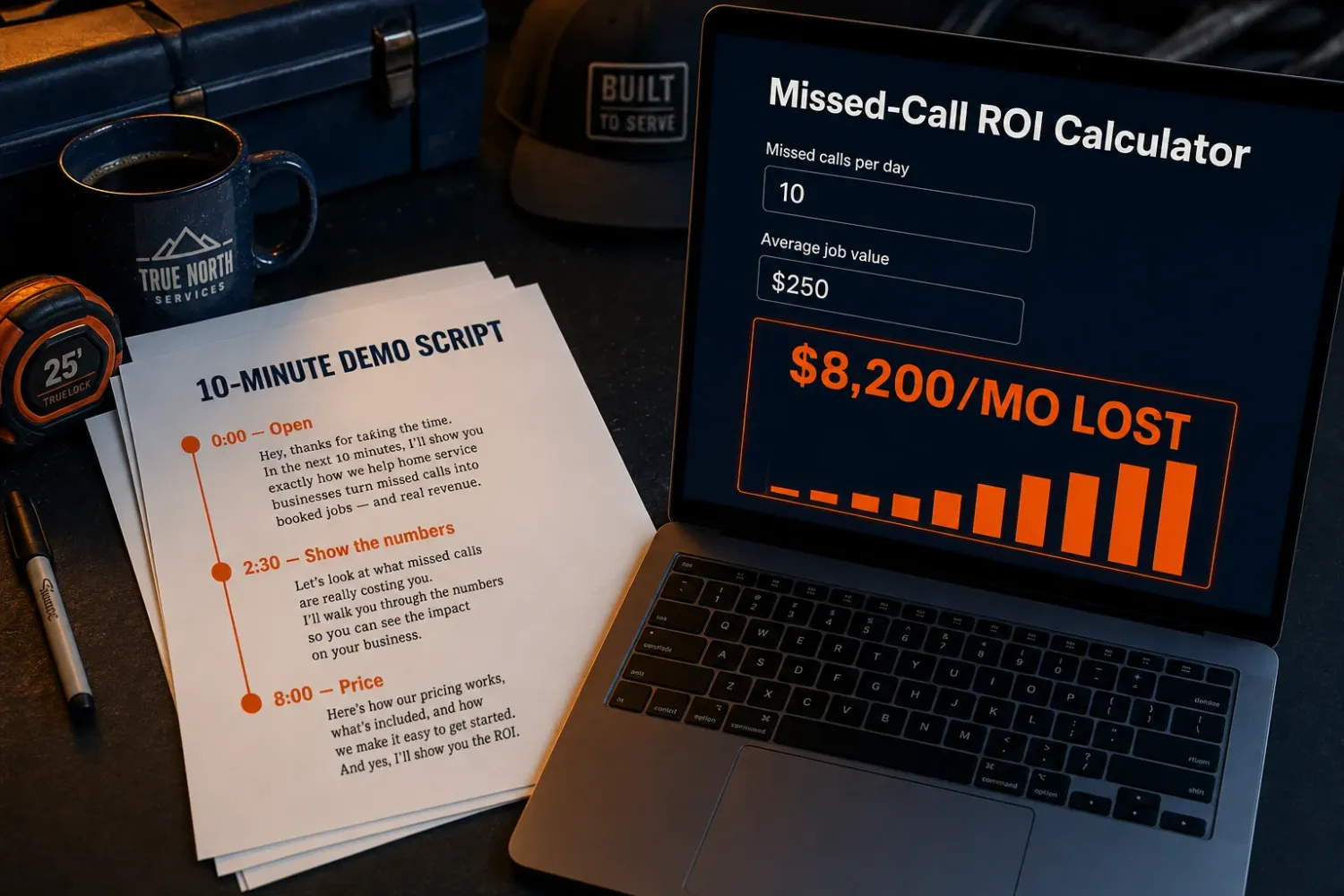
This written system hands you the whole trade: the tools to connect (zero code anywhere), the outreach messages already written, the 10-minute demo, the price list. You bring the one skill you already have: talking to people.
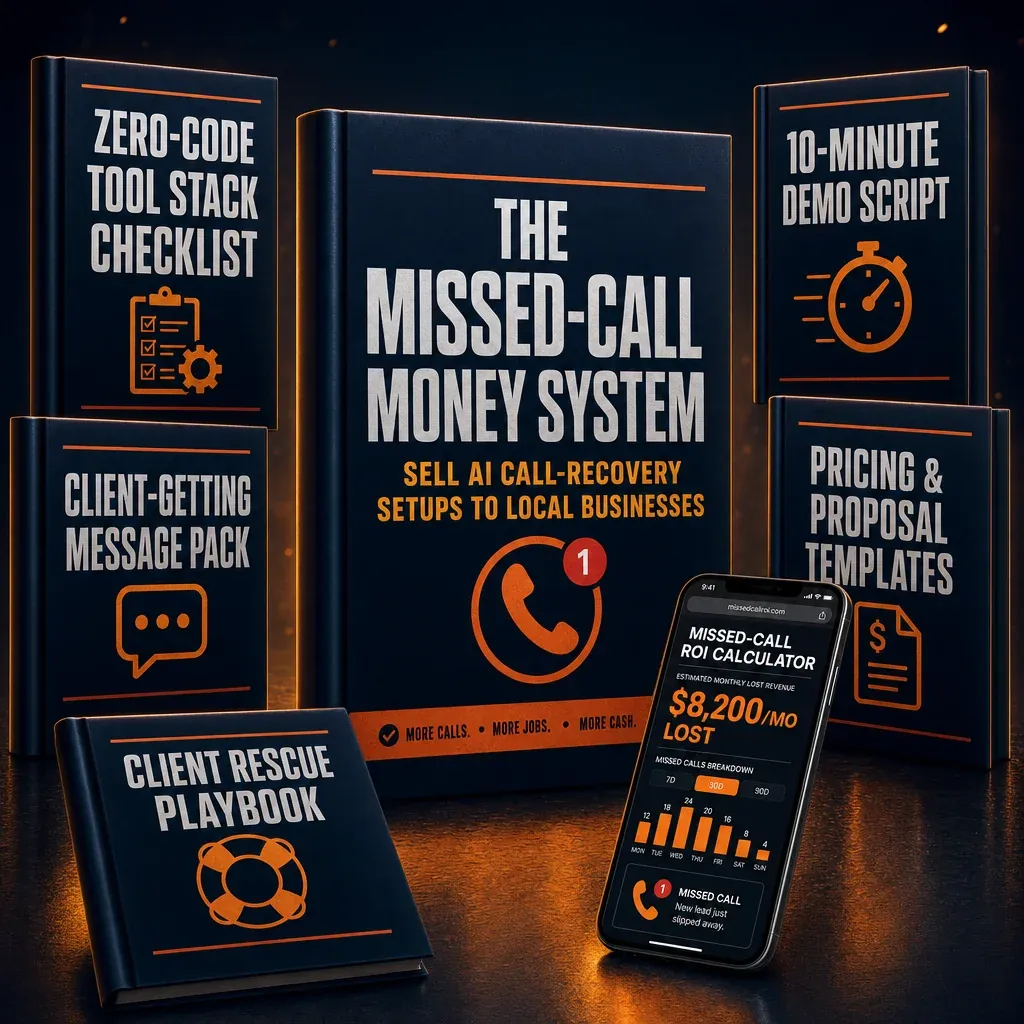
While you read this page, a phone somewhere near you is ringing with nobody picking up. That job goes to whoever set up the text-back. $27 is the whole cost of being that person.
How many "make money with AI" videos have you watched without making a dollar?
It's not a discipline problem. The model you were pitched is broken. "Start an AI automation agency" sounds great until a plumber asks what you actually do.
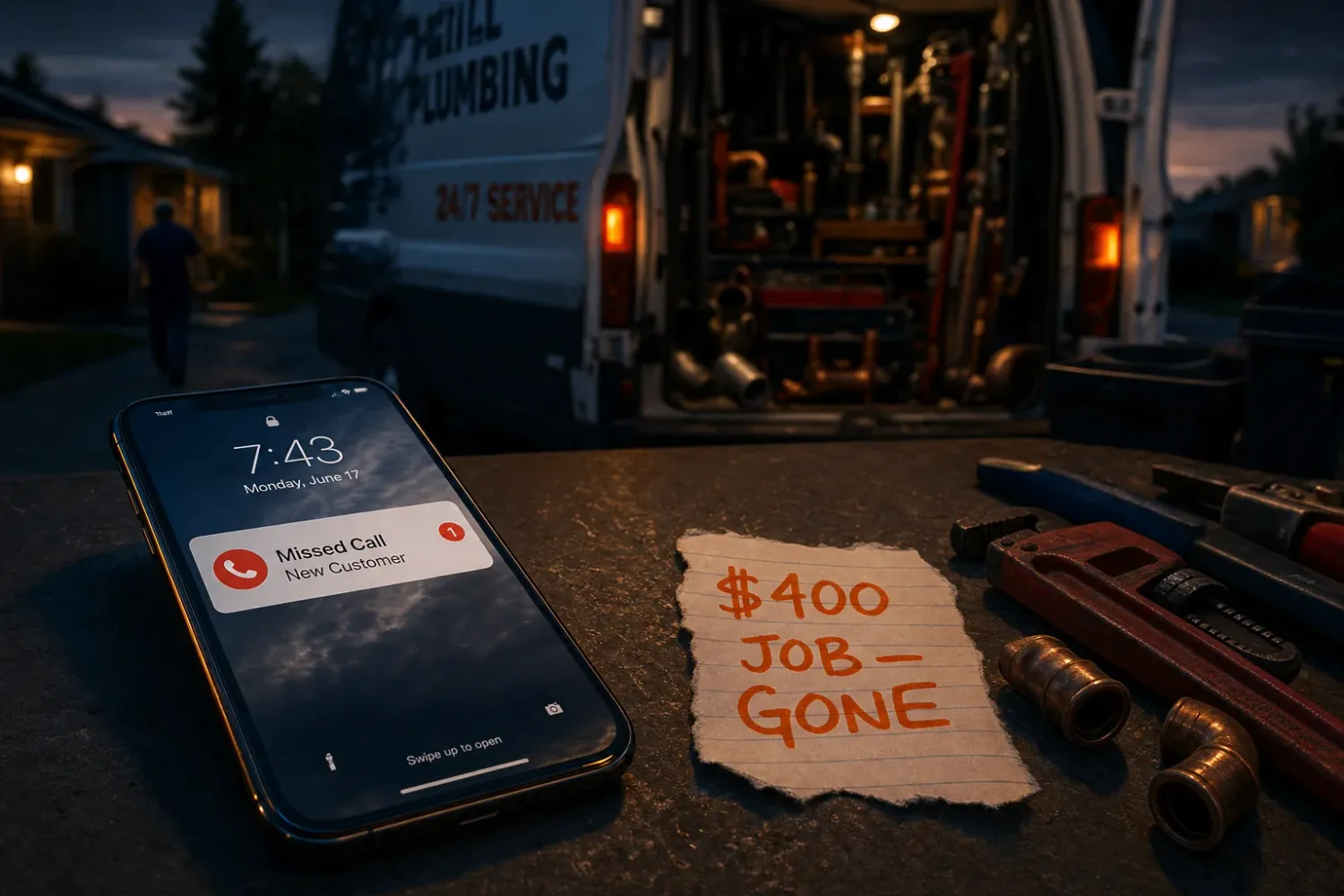
Meanwhile, every unanswered phone in your town is sending a paying customer to a competitor. Business owners know it. They hate it. And almost nobody is selling them the fix.
The "AI agency" dream vs. the missed-call business
❌ The AI agency dream
✓ The missed-call business
What your first two weeks look like
Not a projection. This is the path the guide walks you through, step by step, with the exact time each step takes.
Will your calendar match this exactly? Probably not. Some people get a reply to the first five messages, some send twenty before the first yes. The point: every step is small, already written for you, and takes minutes. Not months.
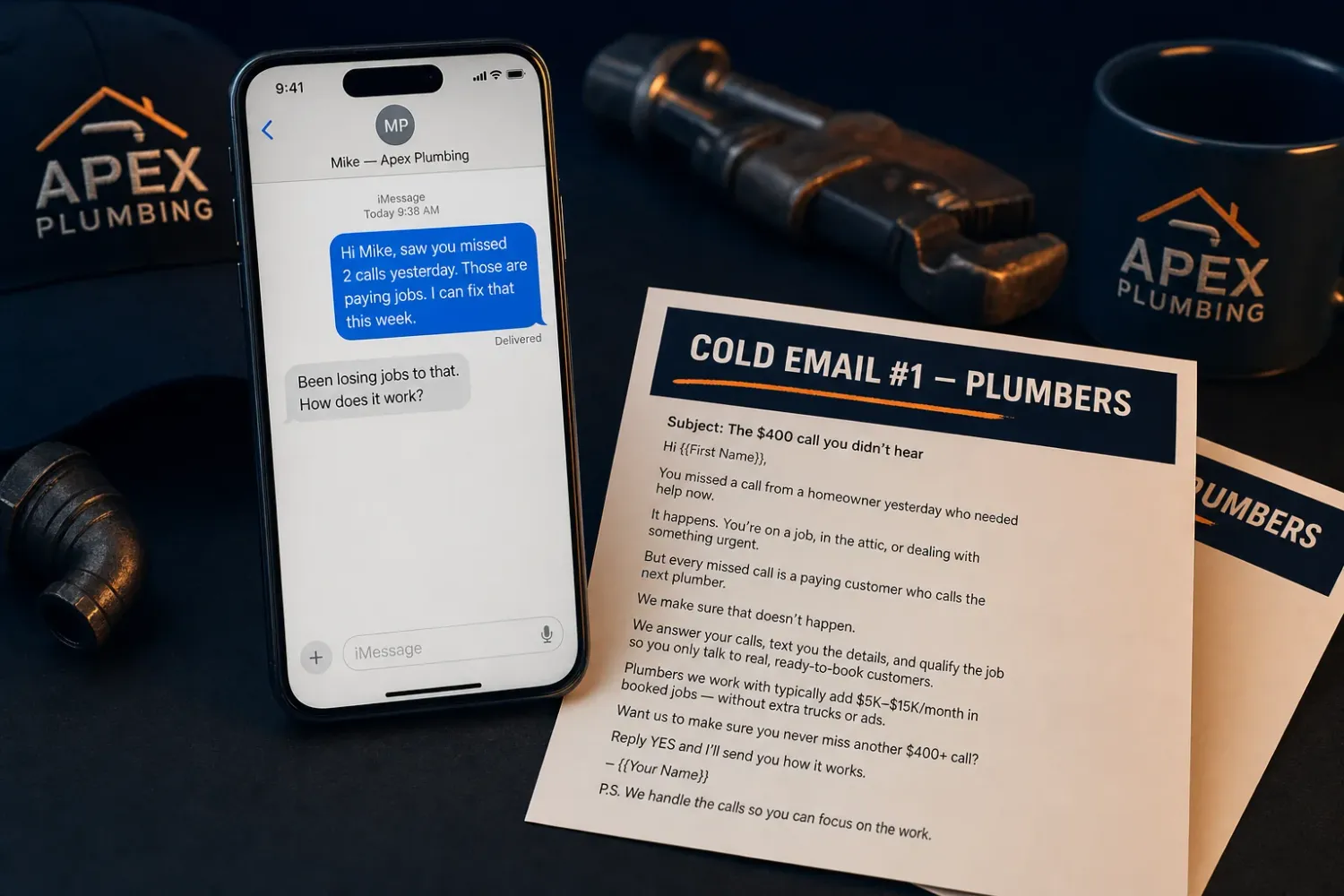
Don't take our word for the Message Pack. Take a message.
This is message #4 of 23, the one that starts most of Mike's client relationships. It's yours. Send it tonight if you want.
"Hey Dave, quick question about the shop. I called yesterday around 2pm and it went to voicemail. Out of curiosity: how many calls like that do you guys miss in a week? Most plumbing shops I ask say 5 or 6. I set up a simple system that texts every missed caller back within 30 seconds, so the job doesn't go to the next guy on Google. Flat fee, done in one afternoon. Want me to show you how it works on your own number? Takes 10 minutes."
Nobody likes contacting strangers. So look at what this really is: one text message, already written, sent to a person whose phone problem is real and costing him money every week. No cold calls, unless you decide you want them. Nobody laughs at you. The worst thing that can happen is silence, and silence costs you nothing. The other 22 messages cover every situation after this one: the reply, the objection, the follow-up, the close.
What's inside The Missed-Call Money System
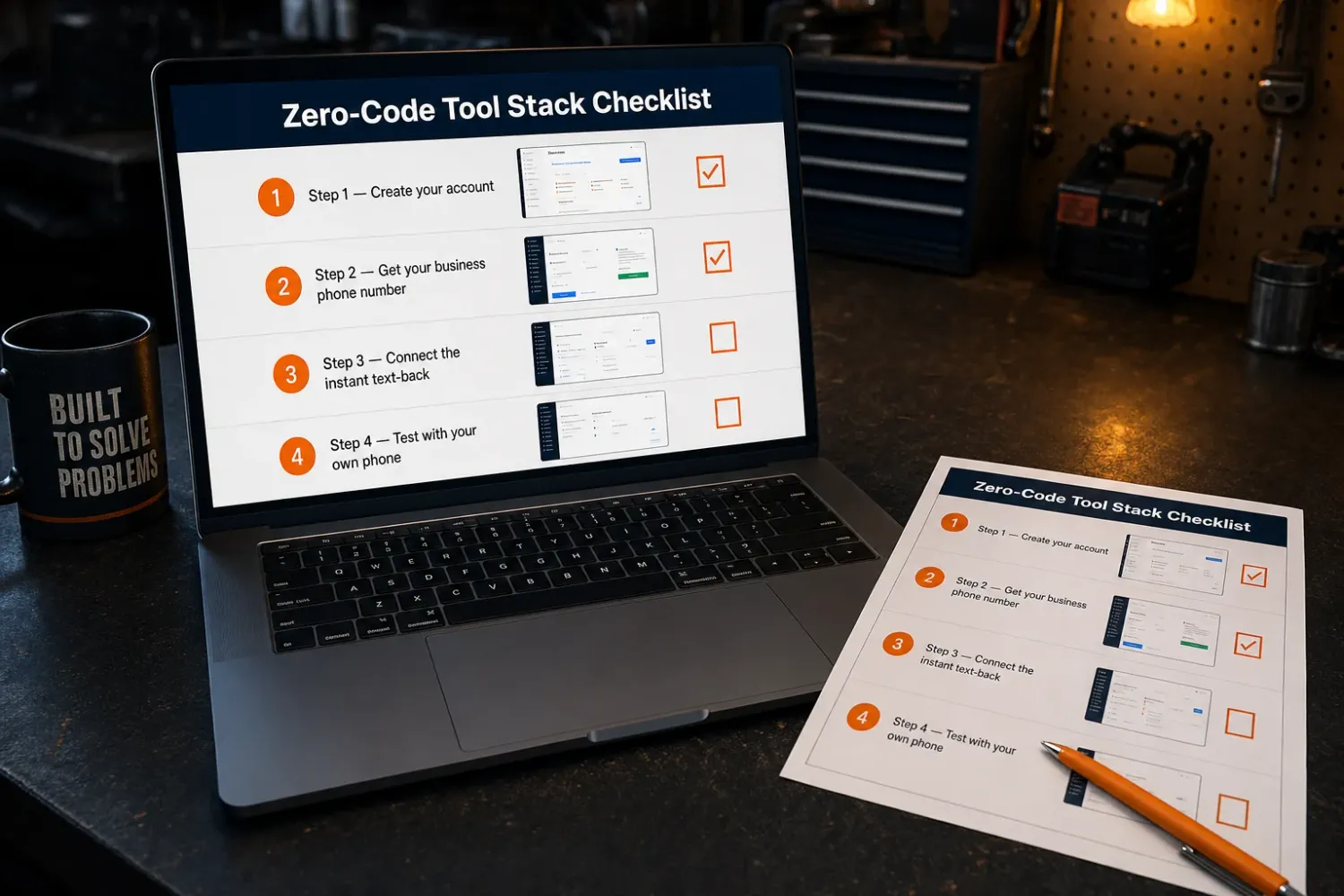
A step-by-step written guide. No videos to sit through. Read it, follow it, sell.
Who this is built for
Not for you if:
Still reading? Then you're exactly who this was written for.
5 bonuses included today, worth $245

Mike Callahan. 6 years in B2B sales, missed-call setups since 2023
"I spent six years hitting quota for other people. The first time a roofer paid me $600 for an afternoon of setup work, I stopped watching tutorials."
Mike sold software and services B2B for six years before going solo. In 2023 he started selling missed-call recovery setups to home service businesses, and wrote down every step, script and price into this system.
Why $27?
The $27 covers the ad that brought you here. That's it. Later, some buyers pick up one of the advanced offers, and that's where this business makes its margin. You get the full system either way. No trick, no trial, no subscription hiding behind the button.

30 days. Satisfied or refunded.
Read the guide, follow the checklist, send your first messages. If within 30 days you decide this isn't for you, reply to your purchase email and the $27 comes back. No forms, no questions, no hoops.
Your zip code only needs one person doing this
Once a plumber has a text-back system, he brags about it at the supply house. His roofer buddy asks who set it up. That's how this business spreads: the first person in an area collects the referrals, and everyone after fights for scraps. In most towns, that first person doesn't exist yet.
There's no countdown on this page and no fake deadline. The thing that should hurry you is the seat: every week it stays open, the phones in your town keep ringing unanswered. Until someone shows up. There's no reason that someone shouldn't be you.
Everything you get today

Questions people ask before buying
No catch. $27 covers our ads, and some buyers later take one of the advanced offers. You get everything on this page for $27, forever.
Nobody can promise you a date, and you should distrust anyone who does. The realistic pattern: messages go out in week one, the first interested reply usually shows up within a couple of weeks of consistent sending, and the first paid setup follows the first good demo. Some people are faster. If you never send the messages: never.
The tools run on cheap monthly plans, and the guide shows you how to set everything up under the client's own accounts, so the client covers them as part of the deal. You're not fronting subscriptions for anybody.
Small towns are usually easier, not harder. You need a handful of home service businesses, not a metropolis, and word of mouth between contractors travels faster where everyone knows everyone. The demo works the same on a shop that gets 20 calls a week as on one that gets 200.
Run the test yourself: call three plumbers near you and count how many pick up, then count how many text you back after the missed call. That's the whole market research, and in most zip codes the answer is zero. This is unglamorous local work. That's exactly why the internet crowd skips it and the seat stays open.
Yes. The whole setup is connecting existing tools by following a click-by-click checklist. If you can set up a Facebook page, you can deliver this.
Many people start as individuals and formalize once the income is real, but registration, taxes and liability rules depend on your state. Worth a five-minute check of your local rules before you take paid clients. The Pricing Templates include a simple invoice either way.
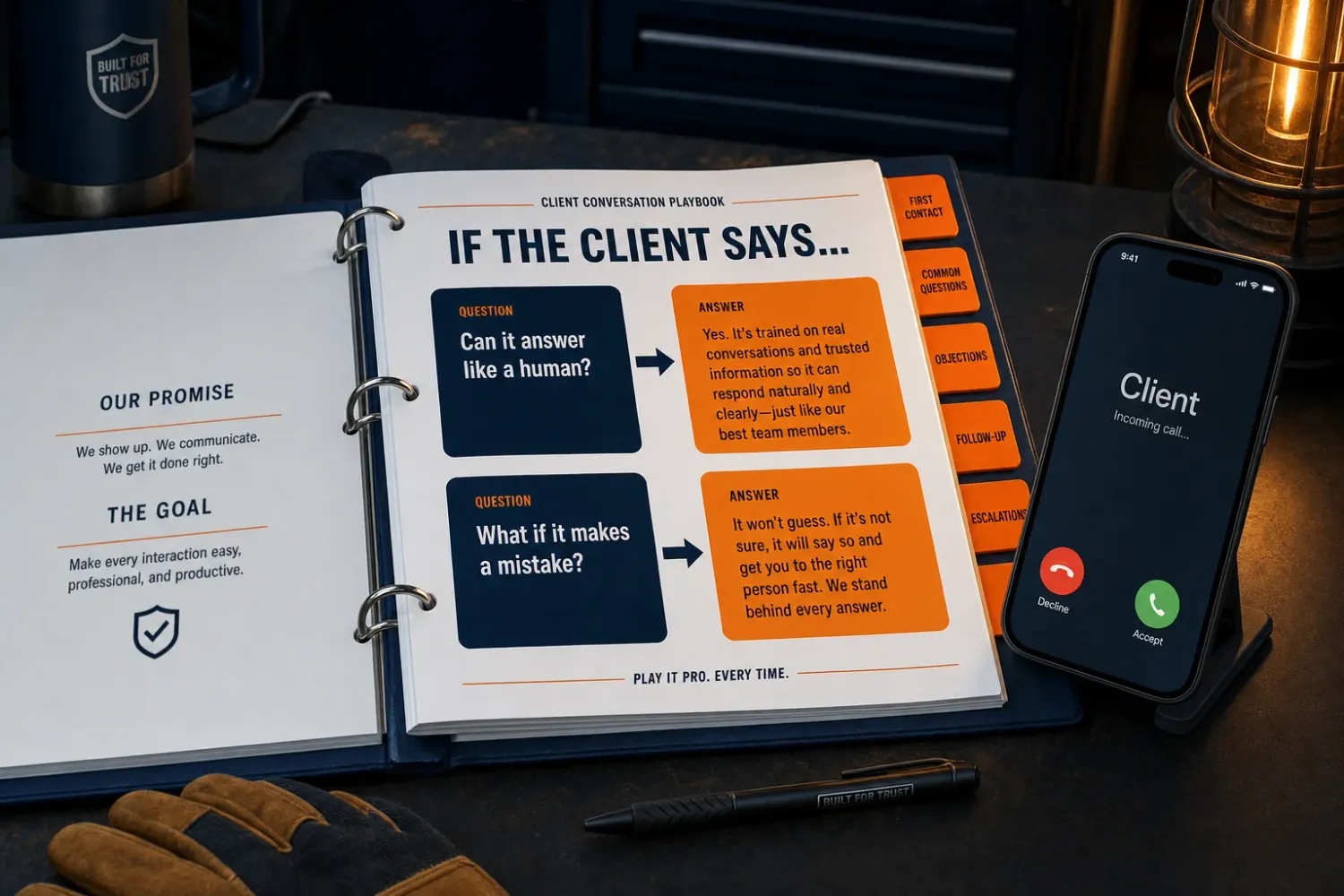
That's what the Client Rescue Playbook is for. It covers the requests owners actually make, and the script for saying no to the ones outside scope without losing the client.
The price is $27 and we're not going to pretend it expires at midnight. What does have a cost is the week. The guide takes one evening to read, the first messages go out the day after. Every week of "later" is a week the first-mover seat in your zip code stays open for somebody else, while the missed calls keep going to the next guy on Google.
The phone is already ringing.
Somewhere in your town a business just missed a call worth $400. For $27 you get the full system, the 23 messages and the demo script to be the one who fixes that.
© 2026 The Missed-Call Money System. All rights reserved.
$97 $27